Gamification in Education: Learning Through Play

Gamification has become quite a buzzword. It refers to the practice of incorporating game elements and mechanics into non-game contexts, such as education. Gamification in education has gained popularity because it makes learning more engaging, interactive, and enjoyable.

At its core, gamification in education is about learning through play. By incorporating game elements like points, levels, badges, and rewards, educators can make learning more fun and motivate learners to actively participate in the learning process.

One of the key benefits of gamification in education is increased learner engagement. When learners are engaged in the learning process, they are more likely to retain information and apply it in practical situations. This is because they are more focused, motivated, and interested in the content they are learning.

Gamification can also help to create a sense of competition and collaboration among learners. When game elements like points, levels, and rewards are incorporated, learners are motivated to compete with each other and work together to achieve common goals. This can lead to increased teamwork, communication, and social skills.

Another benefit of gamification in education is that it can help to personalize learning. By incorporating game elements, educators can create customized learning paths and experiences for each learner based on their interests, strengths, and weaknesses. This can lead to more effective and efficient learning outcomes.

Overall, gamification in education has the potential to transform the way we teach and learn. By incorporating game elements and mechanics into education, we can make learning more engaging, interactive, and enjoyable. This can lead to increased learner engagement, collaboration, and personalized learning experiences.

So, what are you waiting for? Let's gamify education and start learning through play!

The Descent of the Serpent

Google’s Arts & Culture division has released a charming new educational game all about ancient Mesoamerica. The game, The Descent of the Serpent, is available to play right now in your browser or via the Google Arts & Culture iOS and Android apps.

There’s a light plot to Descent of the Serpent, shown in a short video that plays at the beginning of the game. While exploring a museum, a large artifact is stolen by Tezcatlipoca, the Lord of the Smoking Mirror, and a living statue asks for your help to recover 20 icons included on the artifact to prevent floods from taking over the world. You, naturally, agree, and the statue says they’ll send you back in time to ancient Mesoamerica.

You’ll be able to pick from one of four adorable animal “disguises” for your characters that all have roots in Mesoamerican culture. I picked Huitzilopochtli, represented by the wolf, but you can also play as Xolotl (the dog), Xbalanque (the jaguar), and Mictlantecuhtli (the owl).

Game-based learning with the CIA

Dungeons and Dragons, Pokémon card games and role-playing games are more than entertainment -- they're inspiration for the CIA. David Clopper, senior collection analyst with 16 years' experience at the CIA, also serves as a game maker for the agency. From card games to board games, Clopper creates games to train CIA staffers including intelligence officers and political analysts for real-world situations.

"Gaming is part of the human condition. Why not take advantage of that and incorporate into the way we learn?" Clopper said Sunday at a games-themed panel discussion at the South by Southwest Interactive technology festival. Clopper and other CIA officers discussed how the agency uses games to teach strategy, intelligence gathering and collaboration.

https://money.cnn.com/2017/03/13/technology/cia-board-games-training/index.html

#experientiallearning #learnbydoing #gamification #gamebasedlearning @JJFSThinkLab

Games in learning

I’m happy to see that the Agile Alliance (the OG Agile group that started the Agile Manifesto) has decided to use gaming as an instructional form in their most recent newsletter. Check out this link to see what types of games you can register for to learn more effectively about team-based decision making, visioning and creativity in the Agile way.

Creating creativity

Is necessity the mother of invention? During global crises, humanity has shown we can solve seemly impossible challenges. A dangerous pandemic that will wipe out many people? – hey, we were able to create an innovative vaccine mRNA, launch and distribute to the majority of humans within a year. With that kind of collective brainpower and innovation, why haven’t we “solved” some older medical issues like malaria, dengue or even tuberculosis? We could even prevented the earth from being destroyed by a huge asteroid by drilling a hole and dropping a bomb in the asteroid – ok, ok, the last one was just a Bruce Willis movie.

I guess the trick is for companies and leaders to instil a belief of necessity in our work to get the team to not only work well but be creative? What would you do to create a sense of necessity at your workplace?

#creativity #innovation #experimental #necessity #jjfsThinkLab

Encouraging entrepreneurship with Legos

Singaporeans are not widely know as risk-takers with entrepreneurial talent – although ironically Singapore has been listed as one of the top countries for with a strong entrepreneurial ecosystem. Is there a way to encourage the spirit of entrepreneurship in our organisations as creativity and innovation are the drivers of our future?

We can do so using Legos. By getting staff to build with Legos, we are instilling an experimental mindset and a “never-say-die” spirit to strive for creating that important build. Legos can easily be reused and remodeled to change the build, encouraging one to try and try again. What were some of your favorite Lego sessions and what did you build?

#creativity #legos #innovation #entrepreneurship #experimental #legobuild #jjfsThinkLab

skillsfuture ssg creativity game session entrepreneurship legos

Building entrepreneurship through the Harry Potter Hogwarts Castle

Engine Building games - Terraforming Mars

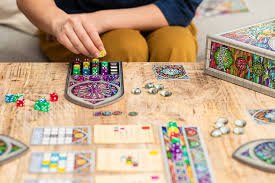
Engine Building games are games where you start off with almost nothing and use the little you have to build up slowly. By the end of the game, you will have built a system that generates whatever it is you need to win the game. Engine building games are characterized by players buying or building up resources that allow them to gain even more currency or resources.

Terraforming Mars takes is one of my top engine-building board game due to its mechanics. Each player takes on the role of a corporation tasked with – surpise! terraforming Mars. Each player’s corporation is represented by their own player board and as the game progresses, they’ll build up the infrastructure necessary to change the Red Planet into a much more livable green and blue one. Are you going to collect microbes and animals? Or perhaps work on generating the most plants and foresting the planet? Or is it all about getting the Terraforming Ratings up as quick as possible so you can build those big point cards with ease later in the game? The player with the highest Terraform Rating and the most victory points at the end of the game wins!

This is a highly strategic type of game since choices made early in the game have a snowball effect over the rest of the game. So if you are looking for a teaching point about strategic planning, systems thinking, analytical skills and even decision making abilities, these would be highly ideal. Which are your favorite type of engine building games?

#enginebuilding #tableaubuilding #experientiallearning #learnbydoing #skillsfuture #ssg #strategicgames #systemsthining #analyticalskills #decisionmaking #gamebasedlearning @JJFSThinkLab

skillsfuture ssg gamebasedlearning terraforming mars

Let’s terraform Mars and learn how to think more strategically!

Engine Building Games

Engine Building or Tableau Building games are games where you start off with almost nothing and use the little you have to build up slowly. By the end of the game, you will have built a system that generates whatever it is you need to win the game. Engine building games are characterized by players buying or building up resources that allow them to gain even more currency or resources. The name comes from the idea that players are building an engine which will produce points later in the game and escalate when you feed those points it produces back into the engine. Some of the best examples of modern engine building games are:

Wingspan

Terraforming Mars

Scythe

Splendor

The Castles of Burgundy

Marvel Champions: The Card Game

Puerto Rico

These are all highly strategic type of games since choices made early in the game have a snowball effect over the rest of the game. So if you are looking for a teaching point about strategic planning, systems thinking, analytical skills and even decision making abilities, these would be highly ideal. Which are your favorite type of engine building games?

#enginebuilding #tableaubuilding #experientiallearning #learnbydoing #skillsfuture #ssg #strategicgames #systemsthining #analyticalskills #decisionmaking #gamebasedlearning @JJFSThinkLab

skillsfuture ssg gamebasedlearning enginebuilding gaming

An engine building game in session!

Creating creativity

One of the most common questions asked when I am training creativity is how can we be more creative? I believe true creativity comes from a change in our mindset and we can all achieve that if we start by doing small things like changing our habits. If we are able to “break” from some routines, we will be on our way to being a master of creativity.

Start today by finding out what routines we have – and simply make changes. For example, try taking the bus or train to work instead of driving. Since you are not forced to focus on traffic, you may notice many new and different things which may spur you to think of some new ideas for work with a more relaxed commute or may be speak to someone on your way to work that may open up new possibilities! Go ahead and try “breaking” your habits and share what you will do differently today!

#creativity #breakhabits #innovation #mentalagility #learning #different #jjfsThinkLab

skillsfuture ssg gamebasedlearning taketrain creativity

Taking the train to improve creativity!

Back in the office?

Your team is supposed to be back to the office and they are dreading it? Start a fun activity to re-bond the team like a creative session or energizer going! You can spark a productivity or creativity session by engaging in some stimulating activities at work like a gaming lunch session or a breakfast energizer! Start work right and speak to us on a trial session on how to implement these team building sessions.

#experientiallearning #creativity #energizer #producitivy #backtotheoffice #boardgames #cardgames JJFS ThinkLab

skillsfuture ssg creativity game session engagement

Having an energizing session through gaming when back in the office helps bond teams

Creating creativity

One of the most common questions asked when I am training creativity is how can we be more creative? I believe true creativity comes from a change in our mindset and we can all achieve that if we start by doing small things like changing our habits. If we are able to “break” from some routines, we will be on our way to being a master of creativity.

Start today by finding out what routines we have – and simply make changes. For example, just the other day I changed the way I exercised. I have been doing a 40min run around my neighborhood in a clockwise manner for the past 1½ year and have gotten very comfortable with the routine. I tried a shorter 25min run in an anti-clockwise manner the past week and noticed so many new and different things which spurred me to think of some new ideas for work (you might even meet some new friends!). Go ahead and try “breaking” your habits and share what will you do differently today!

#creativity #breakhabits #innovation #mentalagility #learning #different #jjfsThinkLab

skillsfuture ssg gamebasedlearning creativity breakhabits

Running and breaking habits!

Creating creativity - with post-its

If you wanted to get your team to have a sparkle of imagination, why not just have some fun activities at work to invigorate the spirit? I remember the days when I was firmly stuck on the bottom of the corporate totem pole and was having a tough time trying to think of a innovative solution – I stopped “trying” to be creative and instead started playing with the rubber bands and paper clips that littered my desk. After creating a slingshot and other idiosyncratic items, I felt much energized. The break gave me the mental agility to think more creatively and allowed me creative freedom.

Another great way to energize through the day is to design “pranks” (we call them experiential activities) and cunning traps (work breaks) in a regular work day. Why? As we all know laughter and fun not only releases endorphins which promotes a sense of well-being, it also boosts your immune system. These physical effects charges up creativity so try a “prank” or 2 before your brainstorming session might be what the doctor ordered. How about blanketing an entire cubicle with post-it notes in the dead of night before work starts? What will you do?

#creativity #energizer #innovation #mentalagility #postits #cubiclelife #jjfsThinkLab

skillsfuture ssg creativity game session engagement

What will you do if you come back to work with your desk like this?

Creating creativity

If you wanted to get your team to have a sparkle of imagination, why not just have some fun activities at work to invigorate the spirit? I remember the days when I was firmly stuck on the bottom of the corporate totem pole and was having a tough time trying to think of a innovative solution – I stopped “trying” to be creative and instead started playing with the rubber bands and paper clips that littered my desk. After creating a slingshot and other idiosyncratic items, I felt much energized. The break gave me the mental agility to think more creatively and allowed me creative freedom. Please share what you can create with rubber bands and paper clips too!

#creativity #energizer #innovation #mentalagility #rubberband #paperclip #jjfsThinkLab

slingshot paperclip skillsfuture ssg creativity game session engagement

Creating a slingshot with paperclips and rubber bands

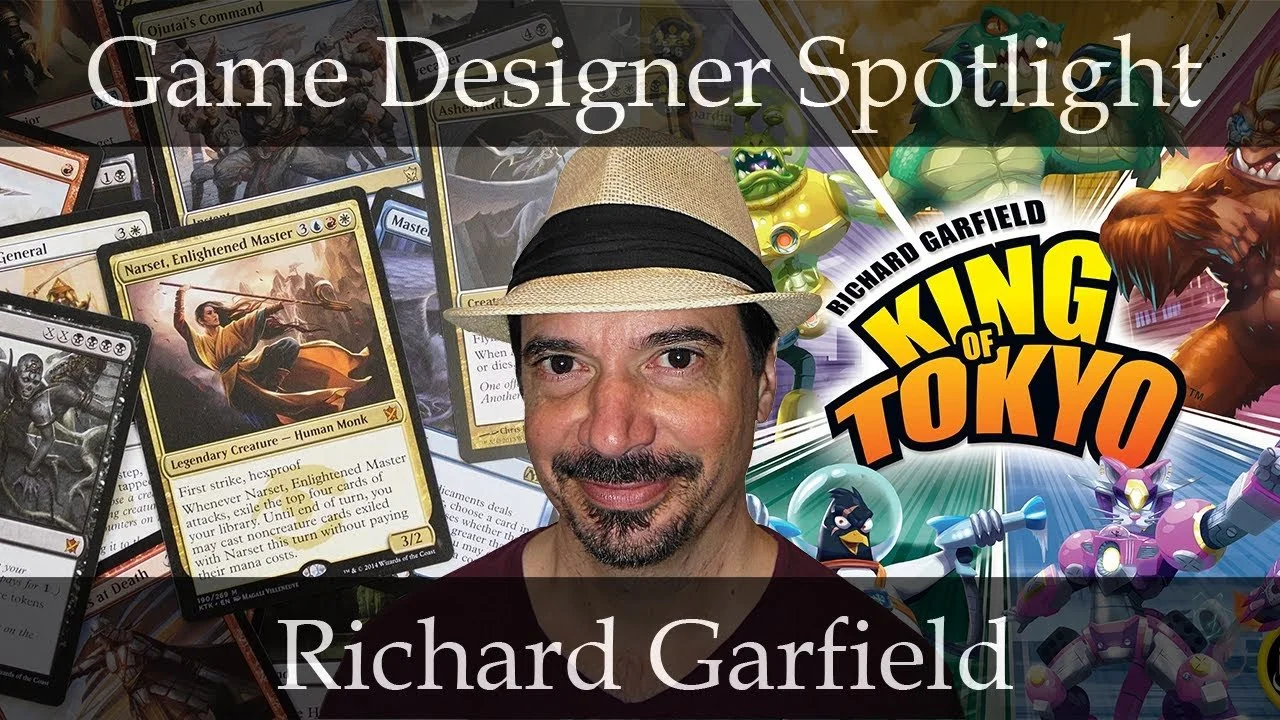
Richard Garfield – designer of Magic: The Gathering

Richard Garfield is a game designer and mathematics professor who is known for creating the very popular card game Magic: The Gathering, considered to be the first collectible card game (CCG). Magic debuted in 1993 and its success spawned many imitations. Garfield oversaw the successful growth of Magic and followed it with other game designs. Included in these are Keyforge, Netrunner, BattleTech(CCG), Vampire: The Eternal Struggle, Star Wars Trading Card Game, The Great Dalmuti, Artifact and RoboRally. Garfield first became passionate about games when he played the roleplaying game Dungeons & Dragons, so he designed Magic decks to be customizable like roleplaying characters.

Magic: The Gathering is a tabletop and digital collectible card game that has approximately thirty-five million players and over twenty billion Magic cards were produced.

A player in Magic takes the role of a Planeswalker, a powerful wizard who can travel ("walk") between dimensions ("planes") of the Multiverse, doing battle with other players as Planeswalkers by casting spells, using artifacts, and summoning creatures as depicted on individual cards drawn from their individual decks. A player defeats their opponent typically by casting spells and attacking with creatures to deal damage to the opponent's "life total". Although the original concept of the game drew heavily from the motifs of traditional fantasy role-playing games such as Dungeons & Dragons, the gameplay bears little similarity, while simultaneously having substantially more cards and more complex rules than many other card games.

Magic can be played by two or more players, either in person with printed cards or on a computer, smartphone or tablet with virtual cards through the Internet-based software Magic: The Gathering Online or other video games such as Magic: The Gathering Arena and Magic Duels. It can be played in various rule formats, which fall into two categories: constructed and limited. Limited formats involve players building a deck spontaneously out of a pool of random cards with a minimum deck size of 40 cards; in constructed formats, players create decks from cards they own, usually with a minimum of 60 cards per deck.

New cards are released on a regular basis through expansion sets. Further developments include the Wizards Play Network played at the international level and the worldwide community Players Tour, as well as a substantial resale market for Magic cards. Certain cards can be valuable due to their rarity in production and utility in gameplay, with prices ranging from a few cents to tens of thousands of dollars.

#richardgarifield #experientiallearning #learnbydoing #skillsfuture #ssg #strategicgames #magicthegathering #gamebasedlearning JJFS ThinkLab

skillsfuture ssg learnbydoing gamebasedlearning experientiallearning magicthegathering

There are over 20 billion Magic cards produced, do you own any?

Game designer showcase - Richard Garfield

Richard Garfield is a game designer and mathematics professor who is known for creating the very popular card game Magic: The Gathering, considered to be the first collectible card game (CCG). Magic debuted in 1993 and its success spawned many imitations. Garfield oversaw the successful growth of Magic and followed it with other game designs. Included in these are Keyforge, Netrunner, BattleTech(CCG), Vampire: The Eternal Struggle, Star Wars Trading Card Game, The Great Dalmuti, Artifact and RoboRally. Garfield first became passionate about games when he played the roleplaying game Dungeons & Dragons, so he designed Magic decks to be customizable like roleplaying characters.

In 1985, Garfield received a Bachelor of Science degree in computer mathematics. After college, he joined Bell Laboratories, but soon after decided to continue his education and attended the University of Pennsylvania, studying combinatorial mathematics for his PhD. Garfield studied under Herbert Wilf and earned a Ph.D. in combinatorial mathematics from Penn in 1993.

Garfield and Magic are both in the Adventure Gaming Hall of Fame. List of Notable Games:

1993 Magic: The Gathering

1994 RoboRally

1994 Vampire: The Eternal Struggle

1996 Netrunner

1996 BattleTech CCG

2002 Star Wars: Trading Card Game

2006 Rocketville

2011 King of Tokyo

2012 Android: Netrunner

2014 King of New York

2015 Treasure Hunter

2016 Robo Rally

2017 Bunny Kingdom

2018 KeyForge: Call of the Archons

#richardgarifield #experientiallearning #learnbydoing #skillsfuture #ssg #strategicgames #gamebasedlearning JJFS ThinkLab

skillsfuture ssg gamebasedlearning richardgarfield

The game design icon - Richard Garfield!

Going back to the office and dreading it?

Get a creative session or energizer going! Get a productivity and creativity spark by engaging in some stimulating activities at work like a gaming lunch session or a breakfast energizer! Start work right!

#experientiallearning #creativity #energizer #boardgames #cardgames JJFS ThinkLab

skillsfuture ssg creativity game session engagement

Get staff engaged with a creativity break or lunch gaming session